Single Bed Size
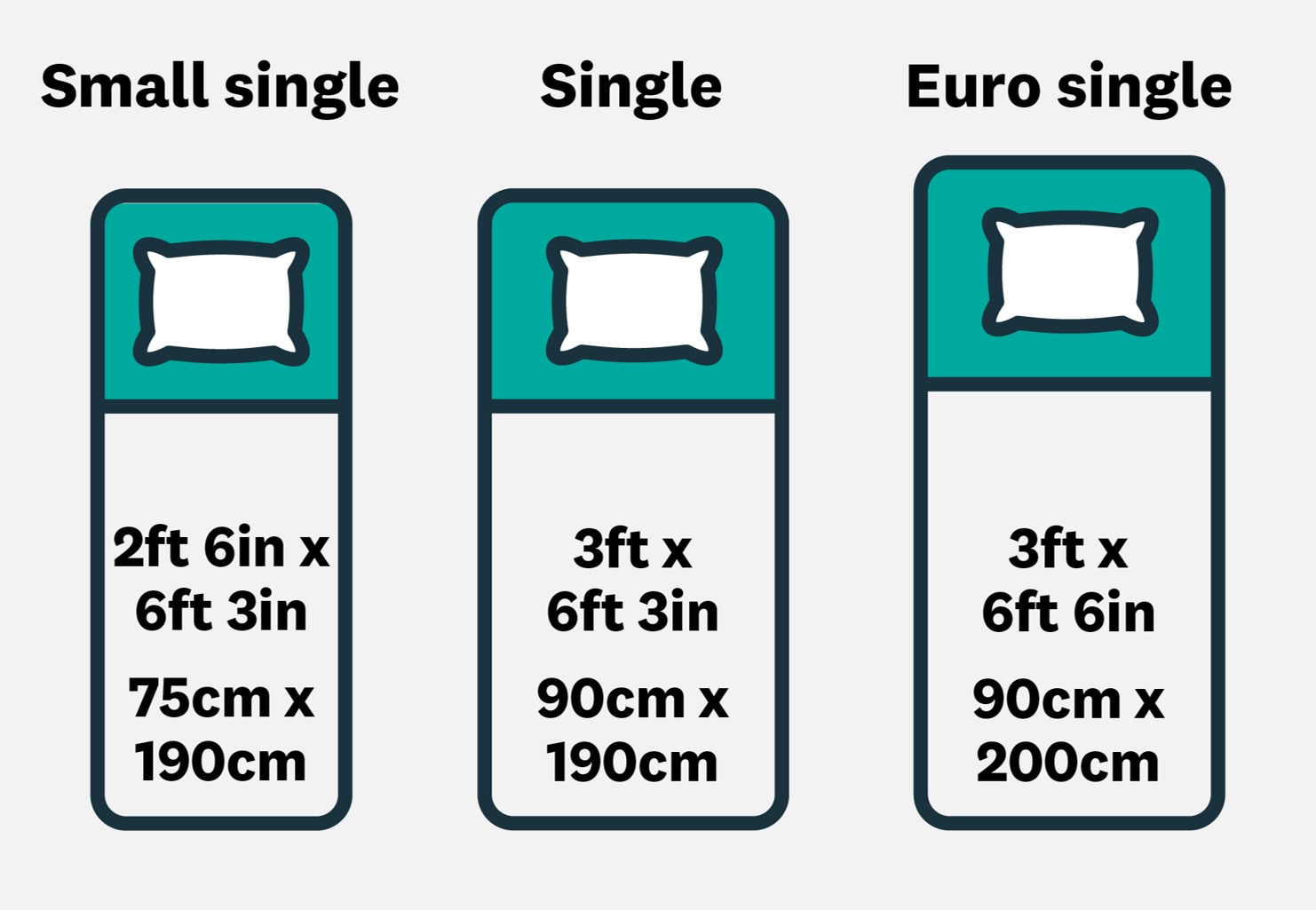
| Single Bed Type | Size (inches) | Size (cm) | Suitable For |
|---|---|---|---|
| US Twin | 38 x 75 | 97 x 191 | Children ages 3+, single adults in small rooms, college dorm rooms with standard furniture. |
| US Twin XL | 38 x 80 | 97 x 203 | Taller teenagers and young adults, college dormitories, narrow rooms needing extra length. |
| UK Single | 36 x 75 | 90 x 190 | Children's bedrooms in UK homes, guest rooms, caravan and boat berths. |
| UK Long Single | 36 x 78 | 90 x 200 | Taller individuals in UK markets, university halls of residence. |
| European Single | 39 x 79 | 100 x 200 | Continental European homes, IKEA-compatible frames, wider single sleepers. |
| Small Single | 30 x 75 | 75 x 190 | Tododdlers, very small children's space-saving beds, hospital and camp cots. |
| Single Bed Size Chart Reference Information : BedSizes.com | |||
About Single Bed Size
Complete guide to single bed dimensions, regional variations, and selection tips.
A single bed is the most compact standard mattress size designed for one sleeper. In the United States, the equivalent is called a Twin bed, measuring 38 inches wide by 75 inches long (97 x 191 cm). In the UK and many Commonwealth countries, a single bed measures 90 cm wide by 190 cm long (36 x 75 inches), which is slightly narrower than the US Twin. The single bed is the go-to choice for children's rooms, small guest rooms, dormitories, and any space where floor area is at a premium. Understanding the differences between regional single sizes and knowing when to upgrade to a Twin XL or Small Double ensures you choose the right bed for your needs.
1. Single vs Twin: What is the Difference?
The terms "single" and "Twin" refer to the same bed concept: a mattress designed for one sleeper. The naming difference is primarily regional. In the US and Canada, "Twin" is the standard retail term. In the UK, Ireland, Australia, and most European countries, "Single" is used.
The dimensional difference matters: a US Twin (38 x 75 inches) is 2 inches wider than a UK Single (36 x 75 inches). This may seem minor, but it affects bedding compatibility. US Twin sheets will not fit a UK Single mattress snugly, and UK Single fitted sheets will be loose on a US Twin.
For a detailed comparison, see our Twin bed size guide.
2. Standard Single Bed Dimensions by Region.
United States and Canada: Twin measures 38 x 75 inches (97 x 191 cm). Twin XL measures 38 x 80 inches (97 x 203 cm), adding 5 inches of length for taller sleepers. Two Twin XL mattresses placed side by side equal a split king (76 x 80 inches), compatible with adjustable bed bases.
United Kingdom and Ireland: Standard single measures 90 x 190 cm (36 x 75 inches). Long single measures 90 x 200 cm (36 x 79 inches). These sizes are standard for children's beds, guest rooms, and caravan berths.
Europe: The European single (often called IKEA single) measures 100 x 200 cm (39 x 79 inches). This is 10 cm wider than the UK single, providing more comfortable sleeping space for adults.
Australia and New Zealand: Single measures 92 x 188 cm (36 x 74 inches), very close to the UK standard. Long single measures 92 x 203 cm (36 x 80 inches), matching the US Twin XL length.
Asia: Single beds vary by country. In Japan, a single measures 97 x 195 cm. In China, the standard single is 90 x 190 cm, matching the UK size. Always verify exact dimensions when purchasing bedding internationally.
3. Ideal Room Size for a Single Bed.
A single bed fits comfortably in a bedroom as small as 7 by 10 feet (2.1 by 3 meters). This allows for 24 inches of walking space on each side and at the foot of the bed, which is the minimum recommended clearance for safe and comfortable movement.
For a child's bedroom, a single bed works well in rooms of 8 by 8 feet (2.4 by 2.4 meters) or larger, leaving space for a desk, storage, and play area. In shared children's rooms, two single beds (or Twin XL beds) can fit side by side in a 10 by 10 foot room with a 24-inch gap between them.
In studio apartments and dorm rooms, a single bed can be positioned against a wall or in a corner to maximize usable floor space. Loft beds with a single mattress on top free the area below for a desk or seating.
4. Who Should Choose a Single Bed?
Children ages 3 and above: A single bed is the standard first upgrade from a crib or toddler bed. It provides adequate space for growth through the teenage years.
Single adults in small spaces: If your bedroom is under 10 by 10 feet, a single bed preserves floor space for other furniture while providing comfortable sleeping for one person.
College students: Twin XL beds are the standard in most US dormitories. The extra 5 inches of length accommodates taller students.
Guest room with multi-use: A single bed in a guest room leaves space for a desk, reading chair, or storage when the room is not being used for sleeping.
Bunk bed owners: Single (or Twin) mattresses are the standard for bunk beds. Ensure you check the mattress thickness recommendation for the top bunk safety rails.
5. When to Upgrade from a Single Bed.
Consider upgrading to a larger size if: you are taller than 6 feet 3 inches (a Twin XL or long single provides 80 inches of length); you share the bed with a partner (upgrade to at least a double/full); you frequently co-sleep with a child or pet (a double provides the extra width needed); you are an active sleeper who changes positions frequently (a double allows more movement without reaching the edge).
The most common upgrade path is: Single to Double (Full) for single adults wanting more space, or Single to Queen for couples. For a complete comparison, see our mattress size guide.
6. Bedding and Accessories for Single Beds.
Single bed bedding is the most affordable mattress size category. Fitted sheets, flat sheets, duvet covers, and comforters are widely available at all price points. Standard single pillow sizes are 20 x 26 inches (51 x 66 cm).
When purchasing bedding, always check the size label carefully. US Twin bedding (38 x 75 inches) and UK Single bedding (36 x 75 inches) are not interchangeable. European single bedding (100 x 200 cm) requires its own specific size.
For bed frames, single beds are compatible with platform beds, traditional frames with box springs, and adjustable bases. Ensure the frame's internal dimensions match your mattress size, allowing no more than 1 inch of gap on each side.
For guidance on related bedding sizes, explore our bed sheet size guide, pillow size guide, and duvet cover size guide.