Double Bed Size
| Double Bed Type | Size (inches) | Size (cm) | Suitable For |
|---|---|---|---|
| US Double (Full) | 54 x 75 | 137 x 191 | Single adults who want extra space. Guest rooms, studio apartments, and teenager bedrooms. |
| US Full XL | 54 x 80 | 137 x 203 | Taller single sleepers who need extra legroom. College dormitories and small apartments. |
| UK Double | 53 x 75 | 135 x 190 | Standard UK double bed. Common in British homes, hotels, and rental properties. |
| European Double | 55 x 79 | 140 x 200 | Continental European standard. Slightly wider and longer than UK double for added comfort. |
| Small Double (3/4) | 48 x 75 | 122 x 191 | Compact spaces, vintage bed frames, and single sleepers who want a bit more width than a Twin. |
| Double Bed Size Chart Reference Information : BedSizes.com | |||
About Double Bed Size
Everything you need to know about double bed dimensions, uses, and regional differences.
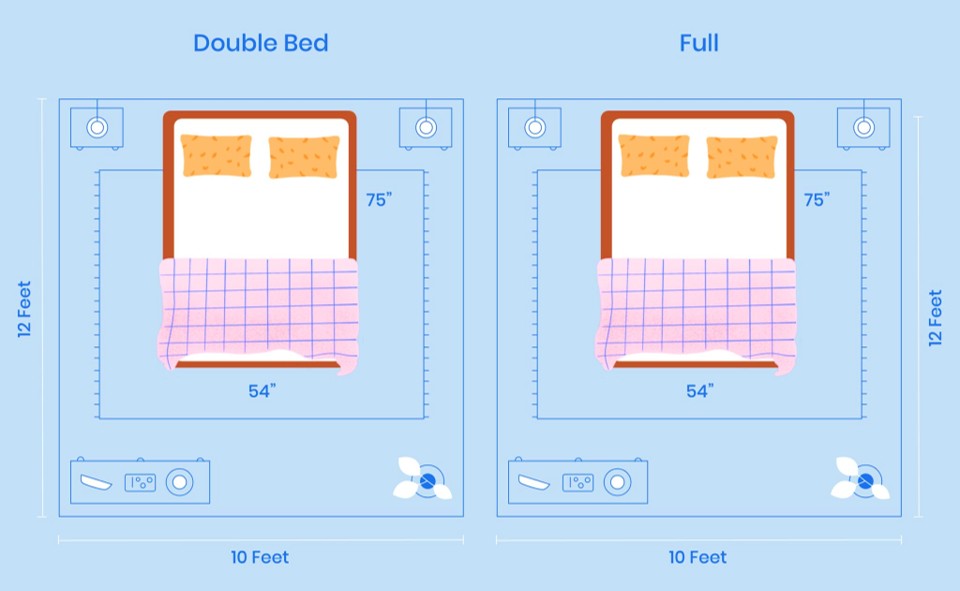
A double bed, also known as a full bed in the United States, measures 54 inches wide by 75 inches long (137 x 191 cm). This size offers each sleeper 27 inches of personal width when shared, which is 9 inches less than a Twin bed per person. The double bed occupies a unique position in the mattress market: it is the smallest bed that can accommodate two adults, yet it is most commonly used by single sleepers who want more space than a Twin provides. Understanding the double bed's strengths, limitations, and regional variations helps you choose the right size for your needs.
1. Double vs Full: Are They the Same?
Yes, in the United States, a double bed and a full bed are identical in size: 54 inches wide by 75 inches long (137 x 191 cm). The terms are used interchangeably in the mattress industry, though "full" has become more common in American retail while "double" appears more frequently in historical contexts and international markets.
When shopping for bedding, frames, or mattresses, you will see both terms. Full sheets fit double beds, and double bed frames accept full mattresses. There is no dimensional difference between the two.
For comparison with other sizes, see our full bed size guide and queen bed size guide.
2. Advantages of a Double Bed.
Space Efficiency: A double bed fits comfortably in bedrooms as small as 9 by 9.6 feet (2.7 by 2.9 meters), making it ideal for studio apartments, small guest rooms, and children's bedrooms that need to accommodate growth.
Cost Effectiveness: Double mattresses, frames, and bedding cost 15 to 25 percent less than queen sizes and 30 to 40 percent less than king sizes. Sheets, duvet covers, and blankets for double beds are widely available at standard retail prices.
Versatility: The double size works well as a daybed in multi-use rooms, a guest bed for single visitors, and a first upgrade from a Twin for teenagers. It also fits vintage and antique bed frames that were commonly built for 54-inch widths.
Single Sleeper Comfort: For one person, a double bed provides generous width (54 inches) that allows free movement, multiple sleeping positions, and space for a pet or child to join occasionally.
3. Limitations of a Double Bed.
Couple Comfort: The most significant limitation is width when shared. At 27 inches per person, a double bed provides less personal space than a crib (28 inches wide). Most couples find a double bed too narrow for comfortable, uninterrupted sleep, particularly if one or both partners are active sleepers.
Length Constraints: At 75 inches (191 cm), a double bed is too short for individuals taller than 6 feet 3 inches. Their feet will hang off the edge, causing discomfort and poor sleep posture.
Motion Transfer: The narrow width means that movement by one sleeper is more easily felt by the other. This is compounded by the shorter length, which limits position changes.
If you share your bed and have the space, upgrading to a queen (60 x 80 inches) or king (76 x 80 inches) significantly improves sleep quality for both partners.
4. Regional Variations in Double Bed Sizes.
The double bed size varies by region, which is critical when purchasing internationally or shopping online:
United Kingdom and Ireland: A UK double measures 135 x 190 cm (53 x 75 inches), slightly narrower than the US full. UK bedding will not fit a US double mattress perfectly. Always check dimensions.
Europe: The European double (also called a continental double) measures 140 x 200 cm (55 x 79 inches). This is 5 cm wider and 10 cm longer than the UK double, offering more comfort for taller sleepers.
Australia and New Zealand: A double bed measures 138 x 188 cm (54 x 74 inches), very close to the US full size. Bedding is generally interchangeable.
Asia: In Japan, a double bed (called a semi-double) measures 140 x 195 cm, which is narrower but slightly longer than the US full. In China, double beds typically follow the 150 x 200 cm standard, which is closer to a US queen width.
5. Room Size and Layout for a Double Bed.
A double bed requires a minimum bedroom size of 9 by 9.6 feet (2.7 by 2.9 meters) to allow 24 inches of walking space on three sides. For a more comfortable layout that includes a nightstand, dresser, and seating area, aim for a 10 by 10 foot room.
In small apartments and studios, a double bed can serve as the primary sleeping and seating area. Position it against the longest wall to maximize open floor space. Use under-bed storage to compensate for limited closet space.
For guest rooms, a double bed accommodates single visitors comfortably and couples for short stays. Consider a double bed with a trundle or pull-out option for additional sleeping capacity.
6. Who Should Choose a Double Bed?
A double bed is the right choice for: single adults who want more room than a Twin but have limited bedroom space; teenagers transitioning from a childhood bed; guest rooms that serve multiple purposes; budget-conscious buyers who want quality bedding at a lower price point; and owners of vintage or antique bed frames built for 54-inch mattresses.
A double bed is not recommended for: couples who share a bed long-term; individuals taller than 6 feet 3 inches; and those who co-sleep with children or pets regularly.
Before purchasing, measure your room and tape the bed dimensions (54 x 75 inches) on the floor with painter's tape. Lie down to simulate the sleeping space. This simple test reveals whether the double size meets your comfort needs. For more guidance, explore our single bed size guide and complete mattress size chart.