King Bed Size
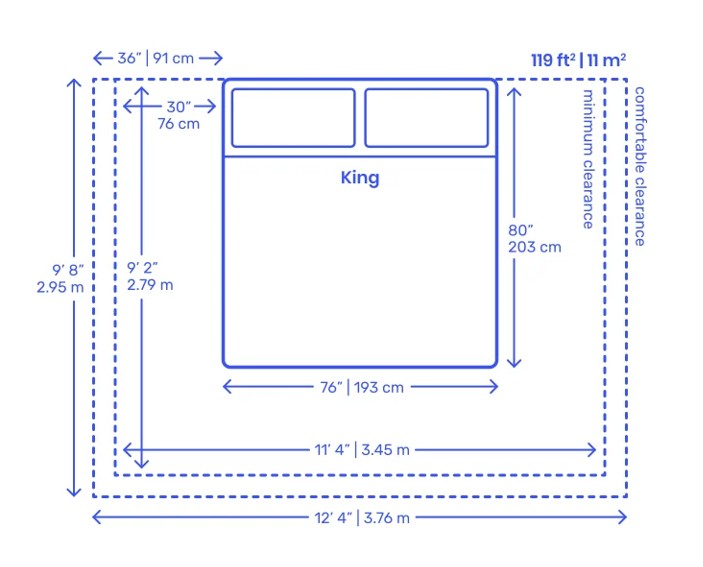
| King Bed Dimensions | Size (inches) | Size (cm) | Suitable For |
|---|---|---|---|
| Standard King | 76 x 80 | 193 x 203 | Couples who want maximum personal sleeping space. Ideal for master bedrooms with minimum 12' x 12' floor area. |
| California King | 72 x 84 | 183 x 213 | Taller individuals (over 6'4") who need extra legroom. Narrower but 4 inches longer than standard king. |
| Texas King | 80 x 98 | 203 x 249 | Families with children or pets who share the bed. Requires a bedroom of at least 14' x 16'. |
| Wyoming King | 84 x 84 | 213 x 213 | Those who want a square sleeping surface with ample width. Perfect for co-sleeping with children. |
| Split King | 38 x 80 (each) | 97 x 203 (each) | Couples with different firmness preferences. Compatible with adjustable bed bases. |
| King Bed Size Chart Reference Information : BedSizes.com | |||
About King Bed Size
The complete guide to king bed dimensions, room requirements, and selection tips.
A king bed is the largest standard mattress size available in most markets, offering 76 inches of width and 80 inches of length (193 x 203 cm). This provides each sleeper approximately 38 inches of personal width, equivalent to a full Twin XL mattress. The king size is the preferred choice for couples, parents who co-sleep with children, and anyone who values unrestricted sleeping space. Understanding the full range of king bed variants, room requirements, and bedding considerations helps you make an informed decision.
1. King Bed Dimensions Explained.
The standard US king mattress measures 76 inches wide by 80 inches long. This dimension has been the industry standard since the 1960s and remains compatible with most bedroom furniture manufactured today. The surface area of a standard king is 6,080 square inches, which is 18 percent larger than a queen bed (4,800 square inches).
The California King, popular on the US West Coast, measures 72 inches wide by 84 inches long. While 4 inches narrower, it provides 4 additional inches of length, making it ideal for individuals over 6 feet 4 inches tall. The California King surface area is 6,048 square inches, nearly identical to the standard king.
For families, the Texas King (80 x 98 inches) and Wyoming King (84 x 84 inches) offer oversized alternatives. These non-standard sizes require custom bedding and larger bedroom spaces. The Alaska King, at 108 x 108 inches, is the largest commercially available mattress but is impractical for most homes.
2. Room Size Requirements.
A king bed requires a bedroom of at least 10 feet by 12 feet (3 by 3.6 meters) to function comfortably. This allows for 24 inches of walking space on each side and at the foot of the bed, which is the minimum recommended clearance for safe movement.
For an optimal layout, a 12 feet by 12 feet room provides adequate space for a king bed along with two nightstands, a dresser, and potentially a small seating area. If your bedroom includes a walk-in closet or ensuite bathroom, ensure the remaining floor area still meets the 10 by 12 feet minimum.
Before purchasing, measure your doorways, hallways, and staircases. A king mattress will not fit through a standard 30-inch door at an angle. You need at least a 32-inch clear opening, and some king mattresses require 36 inches for safe delivery. Measure these pathways before ordering.
3. King vs Queen: Which Size Should You Choose?
The decision between a king and queen bed depends on your bedroom size, sleeping habits, and budget. A queen bed (60 x 80 inches) suits bedrooms as small as 10 by 10 feet and costs approximately 20 to 30 percent less than a king in both mattress and bedding prices.
Choose a king bed if: your bedroom is at least 12 by 12 feet, you sleep with a partner and value personal space, you frequently co-sleep with children or pets, or you are an active sleeper who moves frequently during the night.
Choose a queen bed if: your bedroom is smaller than 12 by 12 feet, you are on a tighter budget, you sleep alone and prefer a cozier feel, or you move frequently and need a more portable mattress.
For a complete comparison of all bed sizes, see our mattress size guide.
4. Bedding Guide for King Beds.
King bed bedding is widely available but costs more than queen sizes. Standard king sheets fit a 76 x 80 inch mattress. California King sheets fit a 72 x 84 inch mattress. These are not interchangeable.
Duvet and comforter sizes for a standard king typically range from 104 x 88 inches to 110 x 98 inches. The extra width and length ensure proper draping over the mattress and box spring. For a California King, look for duvets sized 104 x 96 inches or larger.
King pillows come in two standard sizes: 20 x 36 inches (king pillow) and 20 x 30 inches (queen pillow, sometimes used on king beds for a layered look). Most king bed owners use two to three king pillows, or three to four queen pillows for a fuller appearance.
Budget approximately 30 to 50 percent more for king bedding compared to queen sets. Premium materials like Egyptian cotton or bamboo viscose increase costs further but offer superior comfort and durability.
5. King Bed Frame and Foundation Requirements.
A king bed frame must support at least 600 to 1,000 pounds, accounting for the mattress weight (80 to 150 pounds), two sleepers, and occasional children or pets. Look for frames with center support legs (at least two) and reinforced slats spaced no more than 3 inches apart.
Platform beds eliminate the need for a box spring and provide a modern, low-profile look. Traditional frames require a box spring or foundation, which adds 7 to 9 inches of height. The total bed height (including mattress) should be 25 to 30 inches from the floor for comfortable entry and exit.
For adjustable bases, a split king configuration (two Twin XL mattresses) allows each sleeper to independently adjust head and foot elevation. This is particularly beneficial for individuals with acid reflux, snoring, or circulation issues.
6. Regional King Size Variations.
King bed dimensions vary significantly by region. In the UK and Australia, a king measures 150 x 200 cm (59 x 79 inches), which is narrower than the US standard. A UK Super King measures 180 x 200 cm (71 x 79 inches), closer to but still narrower than the US king.
In Europe, king sizes vary by country. German and Scandinavian standards use 180 x 200 cm, while some Southern European countries use 160 x 200 cm. When purchasing bedding internationally, always verify exact dimensions rather than relying on size names.
For comparison with other standard sizes, see our queen bed size guide and full bed size guide.
7. Common Mistakes to Avoid.
The most frequent king bed purchasing mistakes include: failing to measure doorways and staircases for delivery access, underestimating bedding costs (king duvets and sheets are significantly more expensive), choosing a king for a room smaller than 10 by 12 feet which makes the room feel cramped and blocks natural traffic flow, ignoring the weight of the mattress which makes rotation and moving difficult, and not checking foundation compatibility which can void mattress warranties.
Always measure your space thoroughly, test the mattress in person for at least 15 minutes in your typical sleep position, and verify the return policy includes a minimum 30-day comfort trial.