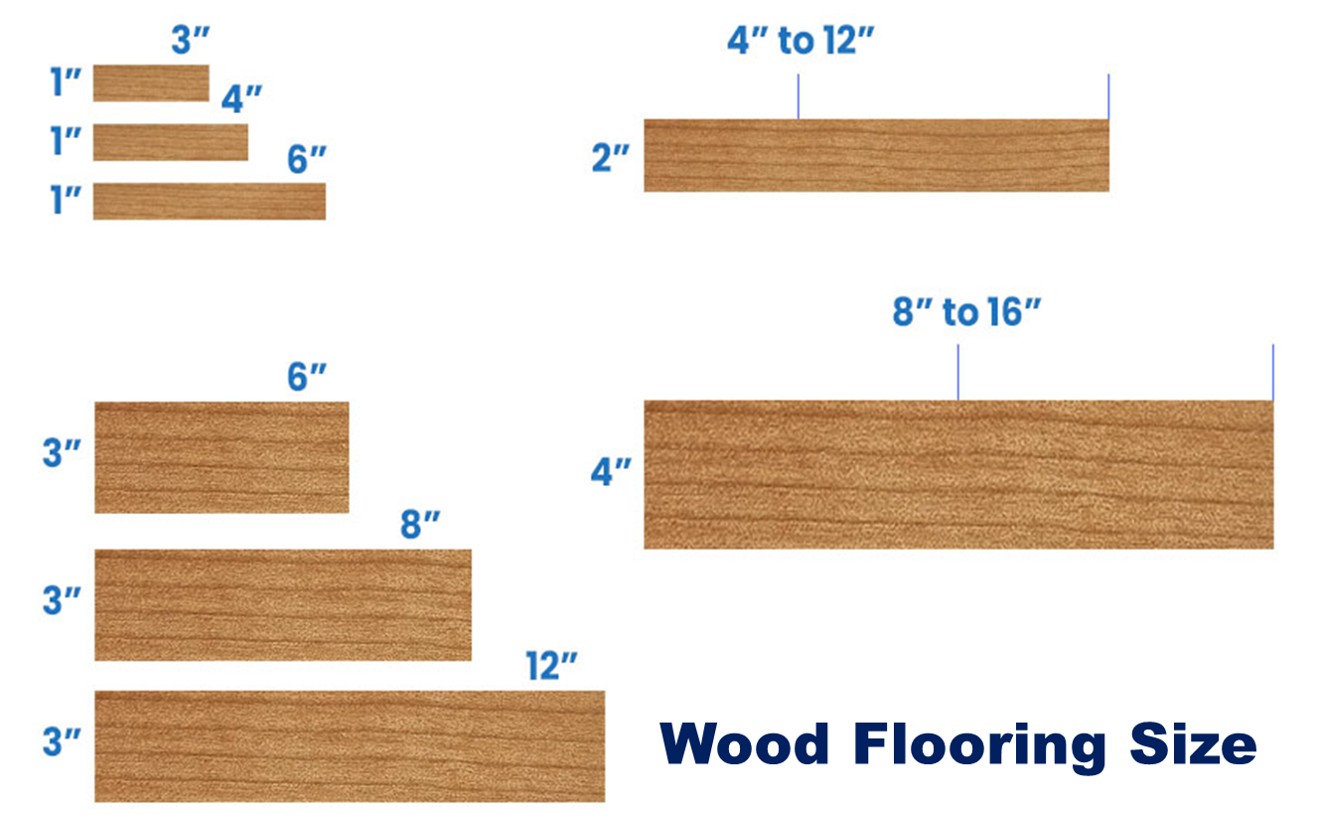
Wood Flooring Size
| Width (inches) | Visual Effect | Suitable For | |
|---|---|---|---|
| 2 1/4 - 3 | Traditional, dense seams | Small rooms, budget projects | |
| 3 - 3 1/4 | Balanced, versatile | Most homes, easy sourcing | |
| 4 | Modern, open feel | Open floor plans | |
| 5 - 6 | Expansive, grain-forward | Large rooms, upscale looks | |
| 7 - 10 | Very contemporary, dramatic | Large spaces, luxury installs | |
| Wood Flooring Size Chart Reference Information : BedSizes.com | |||
About Wood Flooring Size
How to choose the size of wood flooring?
Choosing the right wood flooring plank sizes can dramatically influence room feel, installation ease, and long-term durability. This guide explains common plank widths, lengths, and thicknesses, and shows how these dimensions affect style, performance, and cost. By understanding nominal versus actual measurements, you can compare products accurately and select planks that fit your space and budget while meeting traffic and moisture demands. The goal is to help homeowners and contractors make informed decisions based on the most common wood flooring plank sizes in the market.
1.How Plank Size Impacts Your Selection.
First, plank thickness, in great measure, impacts floor quality and longevity. Solid hardwood comes in sizes ranging from 5/16 to 3/4 inches thick.
Generally, thicker flooring lets you sand and refinish your floors multiple times. And that dramatically extends the life of your hardwood, so you get the most from your investment.
Second, plank widths significantly impact the look of your hardwood floorings. For example, it used to be narrow plank flooring of 2-1/4 inch to 3 inches wide was the norm.
And that flooring was typically solid white oak with its consistent, clean grain pattern. The narrow widths worked with virtually any style owing to their clean lines.
Today, wide plank flooring has taken center stage with homeowners. Standard boards today are generally four to five inches. But wide boards from seven to even 24 inches have become stand fare. It’s interesting to note that engineered hardwood flooring often uses wider planks in its construction.
So let’s look closer at choosing the best floor width for your space.
2. Consider the Room Size.
One of the primary factors to consider when selecting hardwood width is the size of the room. For smaller rooms, narrower planks (around 2-3 inches) can create an illusion of space and make the area feel more open.
For example, narrower planks laid length-wise in a small hallway create the illusion of a longer and more expansive area. However, you can place the boards perpendicular to the walls if you prefer wide planks.
You can undoubtedly use wider boards, but your best bet is at most six to eight inches. Consider using a lighter color to help maintain an airy look in that event.
In contrast, wider planks (around 4-6 inches or more) are better suited for larger rooms as they provide balance and grandeur. You can add that grandeur using random-width planks that add even more character to your floors.
For instance, wider planks boldly appear in larger open-plan areas like living rooms and dining spaces.
3. What Style is Your Home?
For example, a traditional home often dictates narrower planks. The narrow widths reflect a classic look while making a room more elegant.
Narrow planks are also perfect for creating patterned looks in your flooring, like parquet, herringbone, or chevron.
On the other hand, wider planks suit a rustic style perfectly, and the wider, the more rustic. Nonetheless, they’ve become equally popular in contemporary or modern homes, adding a touch of elegance and sophistication.
4. What Hardwood Width Do You Like?
Room designers can give you all the reasons why you should be using narrow or wider plank flooring. But there’s one essential item that trumps their recommendations — you.
It’s your home, so it has to reflect what appeals most to you. Key widths to know include 2 1/4″, 3″, 3 1/2″, 4″, 5″, and 6″ as common starting points. If you like to keep things clean and simple, narrow planks accomplish that. Because their cut from smaller pieces, narrow planks show fewer blemishes than wider planks. They’re also more formal and refined.
Wide planks show more of the wood’s features, like knots and graining, adding to their personality. Finishes like wire brushing or hand scraping increase their natural look even more. At scale, 7″ to 9″ planks are increasingly popular for larger rooms or open-concept layouts. Overall, the width choice should align with the room’s dimensions and architectural style.
5. Standard Lengths And Layout Considerations
Length options influence the visual rhythm and the number of seams. Solid hardwood is commonly found in lengths from 1 to 7 feet, with longer planks increasingly available in premium lines. Engineered wood often uses a mix of random lengths to minimize repeated seams and create a natural look. A random-length approach typically reduces the number of noticeable joints, which many homeowners prefer in living areas and hallways.
When selecting lengths, consider the room shape and subfloor layout. Uniform lengths can create a crisp, contemporary look but may require more waste in cutoffs. Randomized lengths help disguise minor substrate imperfections and provide a more organic aesthetic. In rooms with long sightlines, longer planks reduce the number of joints and can improve perceived continuity.
For practical installation, prefer staggered seams by at least 6–8 inches between adjacent boards to enhance stability and appearance. Engineered planks with locking systems or tongue-and-groove profiles simplify installation and can support faster projects, especially on second-story or retrofit jobs where subfloor conditions vary.
Additional Considerations For In-Home Sizing:
Several practical tips help ensure the final result matches expectations. Match thickness to subfloor and traffic: high-traffic areas like hallways may benefit from thicker engineered products for durability. Plan layouts before purchasing: determine running direction relative to main sightlines; consider door swings and rug placements. Factor expansion gaps: leave 1/4″ to 1/2″ gaps at walls and around fixed objects to accommodate expansion and contraction. Order extra for future repairs: keep a small matchable quantity for future repairs or board replacements.