Wall Art Size
About Wall Art Size
Room Wall Art Size Guide
Choosing the right wall art size can completely transform a space. Whether you’re decorating a small nook or making a statement in your living room, getting the proportions right is key. This wall art size guide is here to help you confidently pick the perfect dimensions for any wall in your home. From small prints to oversized pieces, we’ll walk you through how to size wall art properly based on room type, furniture placement, and design tips—so your space feels balanced, stylish, and thoughtfully curated.
Core Rules of Thumb:
· For a single piece over furniture: Art should be 50-75% of the furniture's width.
· For a blank wall: Art should occupy 60-75% of the available wall space, leaving breathing room.
· Hanging height: The center of the artwork should be at 57-60 inches from the floor (standard eye level). When hanging over furniture, leave 6-12 inches between the art and the furniture top.
Why Wall Art Size Matters in Interior Design?
Wall art isn’t just a finishing touch—it plays a big role in setting the tone and balance of a room. Choosing the right size art for your wall helps create harmony between your furniture, color palette, and overall layout. Too-small pieces can feel lost on a large wall, while oversized wall art can overwhelm a small space. Understanding how art size affects visual proportion and flow allows you to make intentional design choices that enhance your space and reflect your style.
General Wall Art Size Categories.
Wall art isn’t just a finishing touch—it plays a big role in setting the tone and balance of a room. Choosing the right size art for your wall helps create harmony between your furniture, color palette, and overall layout. Too-small pieces can feel lost on a large wall, while oversized wall art can overwhelm a small space. Understanding how art size affects visual proportion and flow allows you to make intentional design choices that enhance your space and reflect your style.
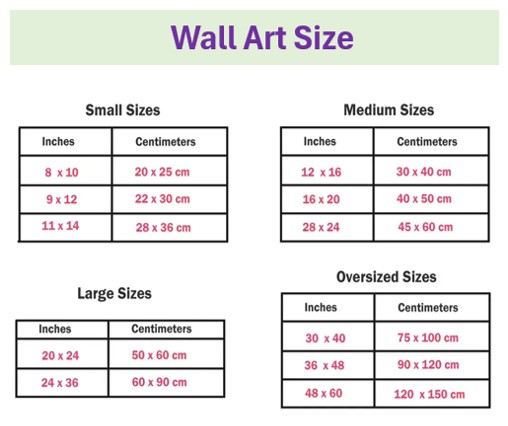
When shopping for wall art, knowing the basic size categories can help you narrow down your options. Wall art typically falls into four groups:
· Small wall art (under 18”) is great for tight spaces or gallery walls.
· Medium art (18”–36”) works well above side tables or in pairs.
· Large wall art (36”–48”) makes a statement over beds or sofas.
· Oversized wall art (over 48”) is perfect for dramatic focal points.
Choosing the right category ensures your art fits your wall—not just in size, but in impact.
Room-by-Room Wall Art Size Breakdown.
Each room in your home has its own unique dimensions, and choosing the right wall art size helps bring the space to life. Here’s a quick breakdown:
· Living Room: Larger pieces (36”–48”) above sofas or fireplaces create a bold focal point.
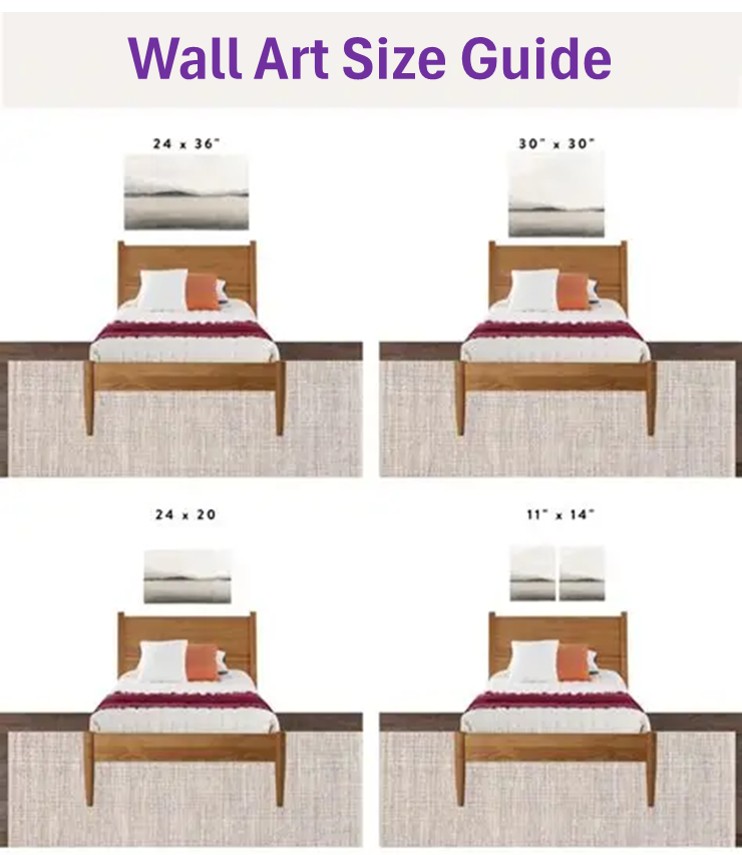
· Bedroom: Medium-sized art (24”–36”) works well above the bed, ensuring balance.
· Dining Room: Larger art (36”–48”) fits above dining tables, complementing the room’s scale.
· Entryway/Hallway: Small to medium pieces (18”–36”) fit narrow spaces and create a welcoming atmosphere.
· Home Office: A 24”–36” piece over a desk adds style without overwhelming the space.
Wall Art Size by Furniture Type.
When choosing wall art, it’s important to consider the furniture below it to ensure a balanced look. For instance:
· Above the Sofa: A large piece (36”–48”) works best, with a width that’s about two-thirds of the sofa’s length.
· Above the Bed: Medium art (24”–36”) looks great centered above the headboard, ensuring it doesn’t feel too small or overpowering.
· Above Consoles/Fireplaces: Opt for larger pieces (36”–48”) to maintain visual proportion with these substantial furniture pieces.
Aligning your art size with furniture creates a cohesive, comfortable design.
Framed vs Unframed Art: How Size Perception Changes.
The frame around your wall art can influence how it’s perceived in terms of size. A framed piece often feels more substantial and defined, while unframed art may appear lighter and more casual. When choosing art size, factor in the width and style of the frame. A large frame can add several inches to the overall size, while smaller or minimalist frames may create a more seamless look. Think about the room’s vibe and what fits best with your design.
How to Measure & Visualize.
· Tape it Out: Use painter's tape to mark the desired dimensions on your wall.
· Paper Mock-Up: Tape together newspaper or kraft paper to the exact size, hang it, and live with it for a day.
· Digital Tools: Many online retailers have "view on wall" AR tools. Use them!
· The Cardboard Trick: Cut a cardboard box to size and hold it up.
Pro Tips & Mistakes to Avoid.
Too Small: The #1 mistake. Small art on a big wall looks like a postage stamp.
Scale Matters: Match the art's visual weight to the room. A large, bold room needs bold art; a minimalist room suits cleaner pieces.
Gallery Wall Grid: Keep spacing between frames consistent (1.5"-3" is standard).
Framing Impact: A large mat or wide frame adds significant size. Factor this in.
Vertical vs. Horizontal: Vertical art draws the eye upward (good for low ceilings). Horizontal art stabilizes a long wall.
Final Tips:
When choosing the perfect art size, trust your space’s proportions. Don’t be afraid to experiment with different sizes to see what works best in the room. Consider the overall aesthetic—sometimes a larger piece can make a bold statement, while smaller pieces add subtle charm.