Pillow Size
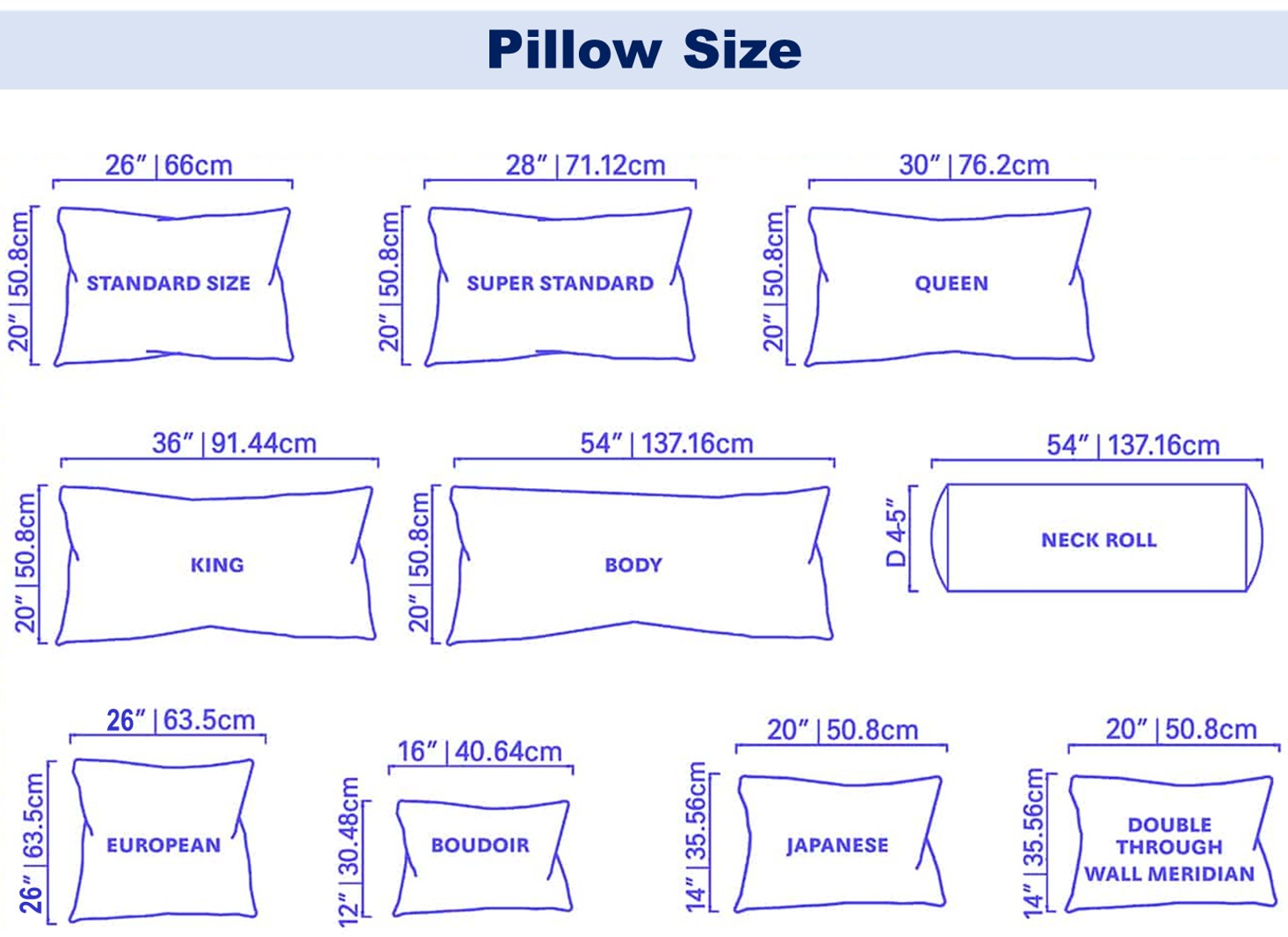
| Pillow size | Measurements (inches) | Measurements (mm) | Suitable For |
|---|---|---|---|
| Standard | 20 x 26 | 51 x 66 | Twin, Twin XL, Full beds |
| Super standard | 20 x 28 | 51 x 71 | Slightly longer than standard, extra snug fit |
| Queen | 20 x 30 | 51 x 76 | Queen pillows, Queen beds |
| King | 20 x 36 | 51 x 91 | King pillows, King or California King beds |
| Body | 20 x 54 | 51 x 137 | Body pillows for flexible positioning |
| Euro | 26 x 26 | 66 x 66 | European style decorative or sleeping pillows |
| Pillow Size Chart Reference Information : BedSizes.com | |||
About Pillow Size
How to Choose the Right Pillow Size?
Choosing the right pillow size isn't just about comfort; it significantly impacts your sleep quality, spinal alignment, and even pillow longevity.
Here’s a comprehensive guide to help you choose the perfect pillow size, broken down by key factors.
1. By Bed Size (The Golden Rule).
This is the most common and practical starting point. The pillow should be proportional to your mattress.
· Standard / Twin Bed (38" x 75"): Use a Standard pillow (20" x 26"). One pillow fits perfectly.
· Full / Double Bed (54" x 75"): You can use two Standard pillows (20" x 26") or one Queen pillow (20" x 30").
· Queen Bed (60" x 80"): Use Queen pillows (20" x 30"). Two side-by-side leave a little space, which looks proportional and comfortable.
· King Bed (76" x 80"): Use King pillows (20" x 36"). Two side-by-side will span the width of the mattress perfectly without overhang.
· Adjustable/California King (72" x 84"): King pillows (20" x 36") are still the best fit.
Why it matters: Properly sized pillows keep your bed looking tidy and ensure you're not fighting for space with a partner.
2. By Your Sleep Position.
Your body's alignment is crucial. The pillow's job is to keep your head, neck, and spine in a neutral line.
Back Sleepers: Need a medium-thickness pillow. A Standard or Queen size usually works. It should fill the space between your neck and the mattress without tilting your head forward.
Side Sleepers: Need the thickest, firmest support to bridge the gap between the ear and outside of the shoulder. A Queen or King size offers more surface area to "hug" or grip, which many side sleepers do. Consider contoured pillows.
Stomach Sleepers: Need a very soft, thin pillow—or even no pillow. A Standard or small accent pillow is often best to avoid craning the neck.
3. By Your Body Size.
A larger-framed person (broad shoulders, especially) will need a larger, fuller pillow to achieve proper spinal alignment, regardless of sleep position. A King size pillow can offer more supportive surface area.
4. Personal Preference & Practical Considerations.
The Mover vs. The Still Sleeper: If you toss and turn, a larger Queen or King pillow gives you a bigger "target" to land on. Still sleepers can often use a smaller size.
Reading/Watching TV in Bed: A King size offers more support when propped up. Euro shams (26" x 26") are excellent for this purpose.
Partnered Sleep: If you share a bed, consistent pillow sizes (two Queens or two Kings) look better and prevent "pillow envy."
Children: Start with a Standard or even a smaller toddler-sized pillow for proper support.
Final Pro-Tips:
Try Before You Buy (If Possible): In a store, lie down in your typical sleep position. Does your head tilt up or down? Is there a gap under your neck?
Check Your Pillowcase: Ensure you have or buy pillowcases that match your new pillow size (e.g., Queen pillowcases for Queen pillows).
Consider the Fill: The material (down, memory foam, latex, microfiber) determines the feel and support within the size you choose. A firm King and a soft King will feel very different.
Replace Regularly: Even a perfectly sized pillow loses support. Replace it every 1-2 years.
In summary: Start with your bed size, then refine your choice based on your primary sleep position and body frame. When in doubt, a Queen-size pillow is the most versatile and commonly used option for adults.