Mattress Size
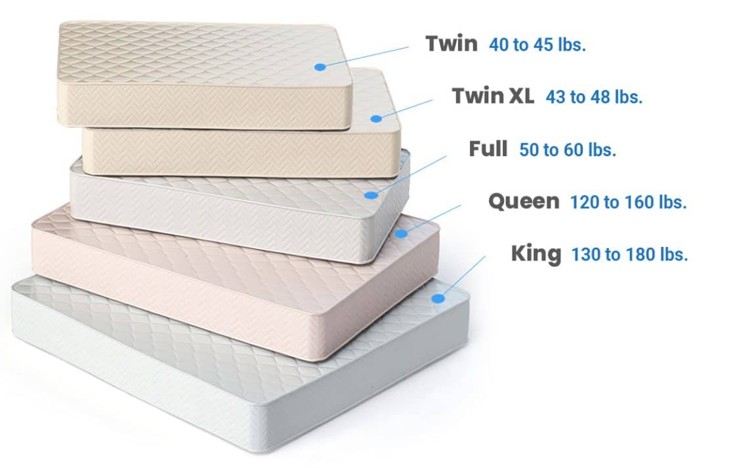
| Mattress Size | Size (inches) | Size (cm) | Suitable For |
|---|---|---|---|
| 28 × 52 | 71.1 × 132.1 | Babies or an infant. | |
| Small Single or Cot | 30 × 75 | 76.2 × 191 | A toddler which has outgrown a crib. |
| Twin Bed Size | 38 × 75 | 96.5 × 190.5 | |
| Twin XL or Single XL or TXL | 38 × 80 | 96.5 × 203.2 | Kids or taller adults who need an extra five inches compared to a Twin or Single. |
| 48 × 72 | 122 × 183 | People with a short stature tend to opt for this size as it doesn’t take up too much room. | |
| Super Single, Three-quarters, or 3/4 | 48 × 75 | 122 × 191 | Kids or adults who prefer a little extra width in exchange for less height. |
| Full or Double | 54 × 75 | 137 × 191 | Good for a single sleeper or someone with children or pets. It can be used for a couple who do not require much legroom. |
| Full XL or Double XL | 54 × 80 | 137 × 203 | Plentiful for a single sleeper and ideal for couples who need extra legroom, but don’t have room for a queen-size bed. |
| Queen RV / Short Queen | 60 × 75 | 152.5 × 190.5 | A bed for a couple in a recreational vehicle (RV). |
| Queen | 60 × 80 | 152 × 203 | Most commonly purchased mattress size as it is the perfect size for most couples and provides plenty of room for single sleepers. |
| Olympic Queen | 66 × 80 | 168 × 203 | The next size larger than the queen for couples before they get a King. |
| California Queen – Waterbed Insert | 58 × 82 | 147 × 208 | Couples looking for a California queen-size waterbed. |
| Split Twin | 76 × 75 | 193 × 191 | Two x Twins combined measure 76”x 75” which offers the width of a King and the length of a Twin. |
| King | 76 × 80 | 193 × 203 | Excellent choice for couples who want plenty of room and personal sleeping space. Be sure to check your room to ensure it will fit in your bedroom. |
| King | 72 × 80 | 183 × 203 | This is the common RV King size. |
| California King – Waterbed Insert | 70 × 82 | 178 × 208 | 2 inches longer but 6 inches narrower than a standard king. Good for taller individuals in the market for a waterbed. |
| California King | 72 × 84 | 183 × 213 | 4 inches longer but 4 inches narrower than a king-sized bed. Great for taller individuals. |
| Texas King | 80 × 98 | 203 × 249 | People in the market for the largest standard bed-size that money can buy with an equally large room. |
| Wyoming King | 84 × 84 | 213 × 213 | This oversized mattress measures 7 feet by 7 feet. |
| Alaskan King | 108 × 108 | 274 × 274 | This is the largest mattress available. |
| Mattress Size Chart Reference Information : BedSizes.com | |||
About Mattress Size
Why choosing the right mattress size is very important?
Selecting the correct mattress size is not merely a matter of comfort—it is a foundational decision that impacts physical health, psychological well-being, relationship dynamics, and overall quality of life. While often overshadowed by discussions of firmness or materials, size constitutes one of the most consequential choices in sleep hygiene, with effects rippling through nearly every aspect of daily functioning. Here’s why getting the size right matters profoundly.
1. Physical Health and Sleep Quality: The Foundation of Well-Being.
①.Spinal Alignment and Musculoskeletal Health.
Adequate Space for Natural Positioning: When a mattress is too narrow or short, sleepers unconsciously contort themselves to fit within boundaries, leading to compromised spinal alignment. This can cause or exacerbate chronic back, neck, and shoulder pain.
Freedom of Movement During Sleep: The average person changes position 20-40 times per night. Insufficient space restricts this natural movement, increasing stiffness and reducing blood circulation. A properly sized mattress allows for micro-adjustments that prevent pressure points.
Growth and Development Considerations: For children and teens, adequate length (particularly Twin XL over standard Twin) accommodates growth spurts without forcing curled sleeping positions that can affect spinal development.
② Sleep Disorders and Breathing.
Sleep Apnea and Positional Therapy: Those with sleep apnea often benefit from specific sleeping positions. A cramped mattress can prevent optimal positioning, potentially worsening symptoms.
GERD/Acid Reflux Management: Elevating the upper body is a common recommendation. A wider mattress provides space for proper propping without disturbing a partner.
2. Psychological and Cognitive Impact: The Mind-Bed Connection.
① Sleep Continuity and Brain Function.
Undisturbed Sleep Cycles: Each time you wake—even briefly—your sleep cycle resets. A mattress that's too small increases the likelihood of partner-induced awakenings, preventing deep REM and slow-wave sleep essential for memory consolidation and cognitive processing.
The "Safety" Phenomenon: Humans have an instinctual need for a secure perimeter during vulnerable sleep states. A mattress that allows ample distance from edges reduces subconscious anxiety, promoting more restorative sleep.
② Mental Health Correlations.
Chronic Sleep Deprivation Effects: Consistently poor sleep due to discomfort directly correlates with increased anxiety, depression, and irritability. The right mattress size serves as preventive mental healthcare.
Personal Sanctuary Effect: In an increasingly demanding world, the bed represents a personal retreat. Adequate space enhances this sanctuary feeling, contributing to psychological recovery from daily stressors.
3. Relationship Dynamics: The Shared Sleep Space.
① Intimacy vs. Sleep Separation.
The Paradox of Couples' Sleep: Research reveals couples desire both closeness and independent sleep space. A properly sized mattress (typically Queen minimum, King ideal) accommodates this paradox—allowing intentional intimacy while preventing disruptive contact during sleep.
"Sleep Divorce" Prevention: The trend of couples sleeping separately often stems from incompatible sleep habits exacerbated by inadequate space. The right mattress size can maintain togetherness while respecting individual sleep needs.
② Conflict Reduction.
Territorial Disputes: Subconscious battles for mattress real estate disappear with adequate width, removing a subtle but persistent source of nighttime irritation.
Temperature Regulation Differences: Larger beds allow partners to use different bedding weights or adjust proximity for temperature preferences without compromise.
4. Long-Term Financial Implications.
① The True Cost of Compromise.
Premature Replacement Cycle: A mattress that's too small often gets replaced sooner due to dissatisfaction, effectively increasing long-term costs. Investing in the right size extends the usable lifespan of your sleep investment.
Healthcare Costs: Poor sleep quality contributes to myriad health issues with associated medical expenses. The right mattress serves as preventive healthcare infrastructure.
Bedding Inefficiency: Ill-fitting sheets and protectors wear faster and require more frequent replacement, adding hidden costs.
② Property Value Considerations.
Bedroom Proportion Aesthetics: Real estate professionals note that properly scaled furniture (including beds) enhances perceived room size and property appeal. An oversized bed makes a room feel cramped; an undersized bed makes it feel incomplete.
5. Life Stage Transitions and Future-Proofing.
Adaptability Across Life Changes.
① From Single to Partnered: A mattress purchased during single life often becomes inadequate when sharing. Forward-thinking sizing anticipates life transitions.
② Family Planning: Couples considering children should account for occasional co-sleeping needs or nighttime comforting, which requires additional width.
③ Aging in Place: Seniors may require easier access or medical equipment space. The right size and placement facilitate independence and safety.
6. The Science of Sleep Surface Calculations.
① Minimum Space Requirements.
Research indicates optimal sleep requires:
Width: Shoulder width x 2 + 25% for movement. For an average shoulder width of 18 inches per person, couples need at least 54 inches combined width (significantly more than a Full/Double's 54" total).
Length: Height + 4-6 inches for pillow space and foot movement. For anyone over 6 feet, standard 75" lengths prove inadequate.
② The Motion Transfer Equation.
Larger mattress sizes exponentially decrease motion transfer between sleepers. In a King mattress, partner movement creates 60% less disturbance than in a Queen, and 80% less than in a Full.
7. Cultural and Social Dimensions.
① The Evolution of Sleep Expectations.
Historical Context: In the 1950s, the average couple slept in a Full bed. Today's larger physical stature and heightened awareness of sleep science have made Queen the minimum standard.
Global Comparisons: Cultures with different sleeping arrangements (futons, floor beds, family beds) recognize spatial needs differently, but the universal principle remains: adequate personal space improves sleep quality.
② The Professional Performance Connection.
Corporate and Athletic Applications: Professional sports teams and Fortune 500 companies invest in optimal sleep environments for performance optimization, recognizing that sleep surface size significantly impacts recovery and cognitive function.
8. The Environmental Impact.
Sustainability Considerations.
① Longer Lifespan: A correctly sized mattress that meets all user needs typically lasts longer, reducing landfill contributions.
② Manufacturing Efficiency: While larger mattresses use more materials initially, their extended usability and reduced replacement frequency often result in lower lifetime environmental impact.
Kind reminder and suggestion:
In an era where we optimize countless aspects of life, from nutrition to exercise to digital tools, sleep remains the foundation upon which all other optimizations rest. And within sleep optimization, mattress size forms the literal and figurative platform. It determines whether you spend one-third of your life in a state of restriction or liberation, disturbance or peace, compromise or fulfillment.
The choice is not between inches on a mattress—it's between limitations and possibilities in waking life. Every day begins with how you slept the night before, and how you slept was fundamentally shaped by the space in which you slept. In this light, choosing the right mattress size becomes not just important, but essential to living well.