Full Bed Size
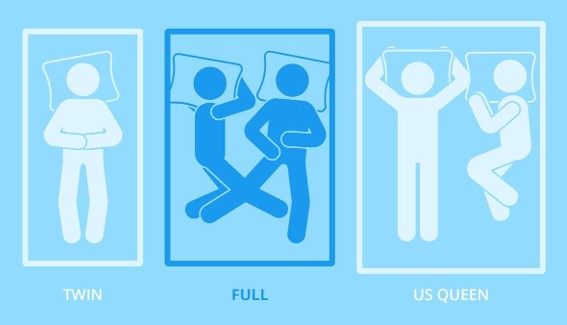
| Full Bed Dimensions | Size (inches) | Size (cm) | Suitable For |
|---|---|---|---|
| Full | 54 × 75 | 137.2 × 190.5 | Good for a single sleeper, someone with children or pets, and couples that do not require a lot of legroom. |
| Full Bed Size Chart Reference Information : BedSizes.com | |||
About Full Bed Size
Comprehensive guide to the size, uses, and considerations of full size beds.
Introduction: Understanding the Full Bed's Place in Modern Sleep.
The full size bed, traditionally called a "double bed," occupies a unique position in today's bedroom landscape. Once the standard for married couples in mid-20th century America, it has undergone a significant evolution in perception and use. This comprehensive guide explores every facet of full size beds, from precise dimensions and historical context to practical applications and buying considerations, providing the information needed to determine if this versatile bed size fits your lifestyle and space requirements.
Chapter 1: Precise Dimensions and Spatial Requirements.
① Standard Measurements.
A standard full mattress measures 54 inches wide by 75 inches long (137 cm × 191 cm). These dimensions create a sleeping surface that offers 27 inches of width per person for couples—exactly half the mattress width for each individual.
Frame and Footprint Considerations:
Bed frames typically add 2-5 inches to each dimension.
Platform beds and those with substantial headboards/footboards may increase the overall footprint.
The total room space required includes clearance for movement and furniture.
② Minimum Room Size Requirements.
For comfortable placement and accessibility, interior designers recommend specific clearances:
24-30 inches on each side for nightstands and easy bed-making.
30-36 inches at the foot for walking space and drawer access.
Minimum room size: 10 feet × 10 feet (120" × 120").
Ideal room size: 10 feet × 12 feet or larger.
Space Planning Examples:
In a 9' × 9' room: A full bed fits but leaves minimal space for other furniture.
In a 10' × 10' room: Accommodates the bed plus one nightstand and a dresser.
In a 10' × 12' room: Allows for balanced furniture arrangement with comfortable circulation.
Chapter 2: Historical Evolution and Modern Perception.
① From "Double Bed" to "Full Bed".
The terminology shift from "double" to "full" reflects changing sleep expectations and standards:
1950s-1960s: The 54" × 75" mattress was marketed as adequate for couples.
1970s onward: Queen-sized beds (60" × 80") gained popularity as the new couple's standard.
21st century: Full beds repositioned as premium single sleepers' beds or transitional sizes.
② The Psychology of Sleeping Space.
Research indicates that sleep quality correlates with available sleeping space:
Sleep disturbance: Partners on smaller beds experience more movement transmission.
Personal space needs: Cultural and individual preferences affect minimum width requirements.
The 30-inch rule: Many sleep experts recommend at least 30 inches width per adult for undisturbed sleep.
Chapter 3: Ideal Use Cases and Target Demographics.
Primary Applications:
① The Single Adult in Urban Dwellings.
Apartments under 800 square feet.
Studio layouts where the bedroom serves multiple functions.
Individuals who value floor space for activities or additional furniture.
② Teenagers and Young Adults.
Transition from childhood twin beds.
Accommodates growth spurts without overwhelming room proportions.
Provides space for studying, gaming, or socializing on the bed.
③ Guest Room Specialist.
Comfortably accommodates single guests with luxury of space.
Can host couples temporarily without dedicating excessive room space.
Maintains room versatility for other uses (office, exercise, etc.).
④ The Budget-Conscious Shopper.
Lower cost for mattress, bedding, and frames compared to queen/king sizes.
Reduced heating/cooling costs in smaller rooms.
More affordable high-quality materials at this size tier.
⑤ Specialty Situations.
Daybeds in living areas that convert to guest beds.
Rental properties and vacation homes.
Senior living situations where smaller spaces are common.
Chapter 4: Advantages and Limitations.
① Key Advantages.
Space Efficiency:
Preserves floor area in smaller rooms (critical in apartments < 800 sq ft).
Allows for more creative room layouts and additional furniture pieces.
Makes small bedrooms feel proportionally balanced.
② Significant Limitations.
Sleeping Surface Constraints:
For couples: 27 inches per person often leads to disturbed sleep.
Length issues: 75 inches may be insufficient for sleepers over 6 feet tall.
Movement transfer: More pronounced than in larger beds, especially with innerspring mattresses.
Future-Proofing Concerns:
Limited adaptability if sleep situations change (partner joins, taller children).
May require replacement if living situations evolve.
Resale value typically lower than more popular queen size.
Chapter 5: The Verdict - Is a Full Bed Right for You?
The Ideal Full Bed User.
The full bed represents an optimal choice when these conditions align:
① You sleep alone most nights.
② Your bedroom is under 120 square feet.
③ You're under 6 feet tall.
④ You value floor space for activities or additional furniture.
⑤ Budget constraints make queen size prohibitive for desired quality.
Conclusion: The Enduring Relevance of the Full Bed.
Despite the trend toward larger sleeping spaces, the full bed maintains its relevance through adaptability and proportional efficiency. It serves as a thoughtful compromise between the spaciousness desired for quality sleep and the spatial realities of modern living. For the single urban dweller, the growing teenager, or the practical homeowner furnishing a guest room, the full bed offers a balanced solution that respects both comfort needs and spatial constraints.