Floor Tile Size
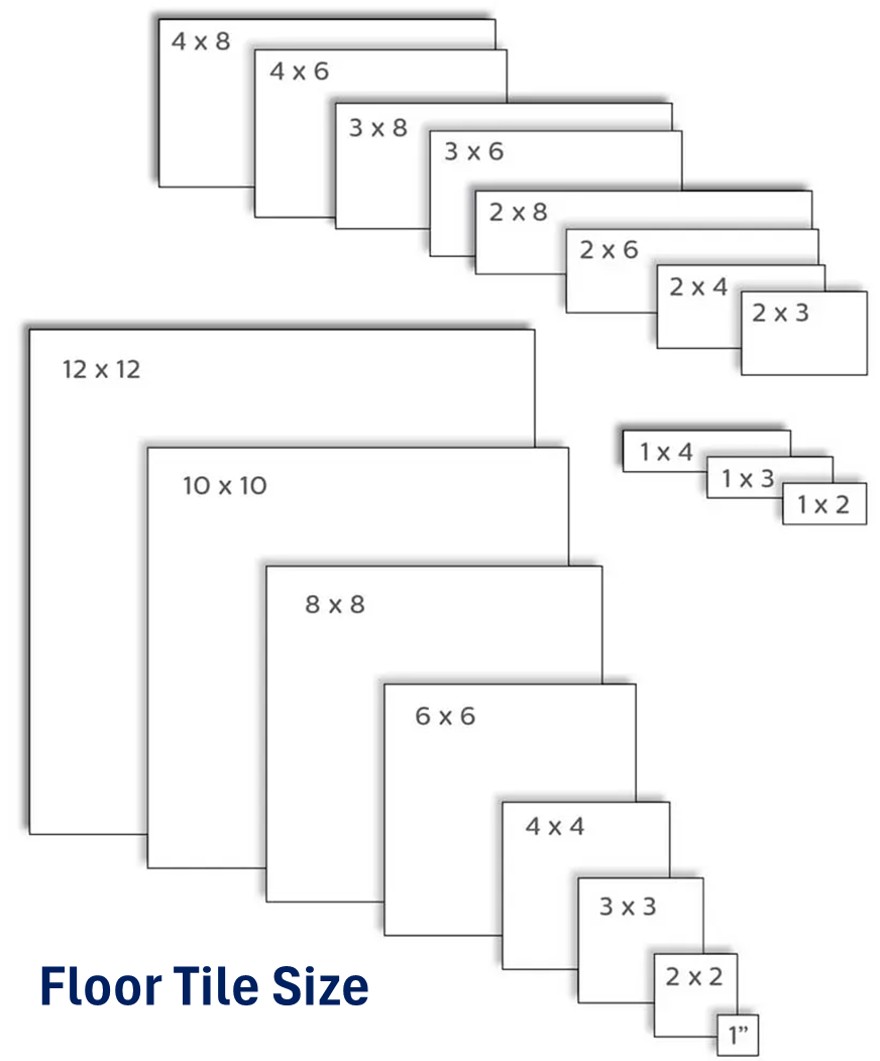
| Size (inches) | Size (mm) | Suitable For | |
|---|---|---|---|
| 12 × 12 | 304 x 304 | A timeless square tile that fits virtually any room, yielding balanced grout lines and easy pattern creation. | |
| 12 × 24 | 304 x 610 | An elongated format that visually lengthens hallways and kitchens while remaining easy to install. | |
| 18 × 18 | 457 x 457 | A versatile mid-size that balances coverage with visible grout for decorative patterns. | |
| 18 × 24 | 457 x 610 | A modern look suitable for bathrooms and open-plan areas; often used with minimal grout lines. | |
| 24 × 24 | 610 x 610 | A large-format option that reduces grout lines and creates a sleek, expansive appearance; requires flat, well-prepared subfloors. | |
| 4 × 4 6 × 6 8 × 8 |
102 x 102 152 x 152 203 x 203 |
Small formats favored for borders, inserts, or pattern work, especially in bathrooms and entryways. | |
| Mosaic sheets 12 × 12 |
Mosaic sheets 304 x 304 |
Consist of tiny tiles (often 1×1 or 2×2 inches) bonded to sheets, ideal for curved surfaces and intricate layouts on floors. | |
| Floor Tile Size Chart Reference Information : BedSizes.com | |||
About Floor Tile Size
How to choose the appropriate floor tile size?
Choosing the right floor tile size is a balance of aesthetics, practicality, and the specific space. Here’s a comprehensive guide to help you decide.
1. Key Factors to Consider.
① Room Size and Proportions.
· Large Rooms (Open-plan, great rooms): Larger tiles (e.g., 24"x24", 24"x48", 36"x36" or larger) work best. They create a sense of flow, make the space feel even larger, and reduce visual clutter from numerous grout lines.
· Small Rooms (Bathrooms, powder rooms, hallways): Medium to smaller tiles (e.g., 12"x24", 18"x18", classic subway) can be ideal. Very large tiles in a tiny room can look awkward, require excessive cutting, and actually emphasize the small size. 12"x24" tiles laid in a linear (herringbone, straight) pattern can elongate a narrow space.
② The "Rule of Thumb".
A common guideline is to choose a tile where at least 80% of the tile's width can be used without cutting across the room. For example, in a 10-foot (120-inch) wide room, a 24-inch tile fits exactly 5 times with no cuts. This minimizes waste and creates a balanced look. Use online tile calculators to visualize.
③ Tile Layout and Grout Lines.
· Large Tiles = Fewer Grout Lines: Creates a seamless, modern, and low-maintenance look (less grout to clean).
· Smaller Tiles = More Grout Lines: Can add texture, pattern, and slip resistance. Grout color dramatically changes the look—contrasting grout highlights the pattern, while matching grout creates uniformity.
· Directional Layouts: Plank tiles (e.g., 6"x24", 8"x48") laid lengthwise can lead the eye and make a room feel longer or wider.
④ Visual Effect & Style.
· Modern/Minimalist: Lean toward large-format, rectified tiles with very thin grout lines for a monolithic, sleek look.
· Rustic/Farmhouse: Smaller tiles, patterns (hexagon, penny tile), or wood-look planks work well.
· Classic/Traditional: Consider smaller formats like hexagon, basketweave, or standard square tiles.
⑤ Practicality and Safety.
Slip Resistance: Check the tile's Coefficient of Friction (COF) rating. Use tiles with a higher COF (rated for floors) in wet areas like bathrooms, kitchens, and entryways. Textured or matte finishes are generally safer than high-gloss.
Cutting and Waste: Larger tiles in complex rooms with many corners, doors, and fixtures will result in more cuts and waste (often 15-20% vs. 10% for standard tiles). This affects cost.
Subfloor Preparation: Large-format tiles require an extremely flat subfloor (often within 1/8" over 10 feet) to prevent "lippage" (uneven edges). Your installer may need to level the floor first, adding to the project cost.
2. Room-by-Room Recommendations.
· Living Room / Dining Room / Open-Plan Areas: Large tiles are king. 18"x18", 24"x24", or large wood-look planks (e.g., 9"x48") create a spacious, cohesive feel.
· Kitchen: Medium to large. 12"x24" is a hugely popular and versatile choice. Large formats also work well, especially in open kitchens. Consider slip-resistant finishes near sinks.
· Bathroom (Floor):
Master/Full Bath: You have options. Large format can be luxurious, but 12"x24" is a very safe and stylish bet.
Small Bath/Powder Room: Mosaic sheets, small hexagon, or classic subway tiles (3"x6") add charm and scale better than oversized tiles.
· Hallway: Plank tiles (6"x24", 8"x48") laid lengthwise can visually lengthen the hall. Larger squares also work.
· Entryway / Mudroom: Durable, slip-resistant tiles are crucial. Medium-sized tiles with texture or pattern help hide dirt.
3. Get samples!
This is the most important step. Bring 2-3 tile sizes home.
Lay them on the floor.
See them in your own light, at different times of day.
View them from the doorway as you would normally enter the room.
Place them next to cabinets and other fixed elements.
Final Pro-Tip: There's no single "right" answer. The trend is toward larger formats, but the perfect choice is the one that complements your specific space, lifestyle, and design vision. When in doubt, a medium size like 12"x24" is an extremely versatile and modern choice that works in most contemporary settings.