Carpet Size
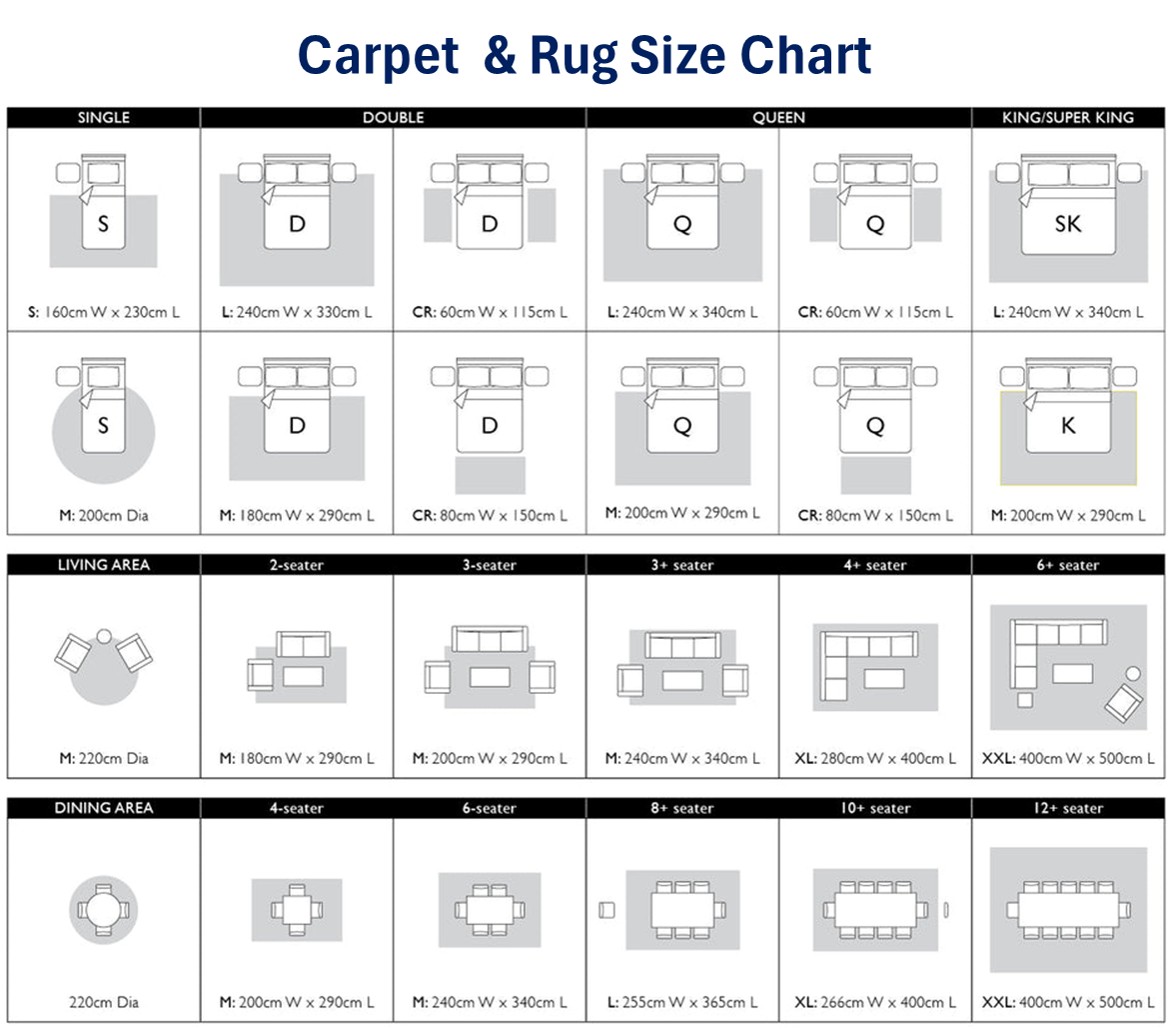
| Carpet Size Aspect | Common Measurements | Notes | |
|---|---|---|---|
| Standard Roll Widths | 12 ft, 15 ft, sometimes 13’6″ | Most popular in U.S. residential use | |
| Roll Lengths | Up to 150 ft | Cut to needed room size; commercial rolls may be longer | |
| Carpet Tiles | 18″x18″, 24″x24″, 36″x36″ | Easier for DIY, used for custom layouts | |
| Area Rugs | 3’x5′, 5’x8′, 8’x10′, 9’x12′ | Pre-made, portable options | |
| Carpet Size Chart Reference Information : BedSizes.com | |||
About Carpet Size
How To Choose Carpet Size?
1. Bedroom Carpet Size.
Placement Options:
· Full Coverage: Rug extends 18-24" beyond sides and foot of bed.
· Runners: One on each side of bed (18-24" wide).
· Bedside Mats: Small rugs just beside bed (3'x5').
Avoid: Tiny rug just at foot of bed (looks disconnected).
2. Living Room Carpet Size.
All Legs On: All furniture legs should sit on the rug (creates unified look).
Front Legs Only: At minimum, front legs of sofas/chairs on rug (more affordable).
Border: Leave 12-24" of floor visible around room edges.
Traffic Paths: Ensure rug doesn't block natural walking paths.
3. Dining Room Carpet Size.
Chair Test: Pull chairs out fully – they should remain on the carpet.
Minimum Extension: 24-36" beyond table edge on all sides.
Shape Matching: Round table → round/octagonal rug; Rectangular table → rectangular rug.
4. Hallway & Stair Carpet Size.
Runner Width: 4-6" narrower than hallway width.
Runner Length: Can be continuous or with breaks at doorways.
Stairs: Each tread should be fully covered with 1-2" overhang at nose.
Carpet Size Measurement Guide.
1. For Wall-to-Wall Carpet:
Measure room length and width at longest points.
Add 10% for pattern matching and waste.
Consider roll width (12'/15') to minimize seams.
Professional measurement recommended for stairs and irregular rooms.
2. For Area Rugs:
Use painter's tape or newspaper to mock up size on floor.
Measure desired coverage area.
Consider furniture placement (tape around furniture legs).
Remember: Bigger usually looks better than too small.
Precautions for choosing carpet.
1. Room Shape & Layout.
Open Plan Spaces: Use rugs to define separate zones (living, dining).
Irregular Rooms: Custom cut or multiple rugs may work better.
Room Size Illusion:
· Large rug = room feels larger.
· Small rug with border = room feels smaller.
2. Door Clearance.
Ensure doors can open/close over carpet height (especially important for area rugs).
Consider transition strips between rooms.
3. Maintenance & Practicality.
Larger rugs anchor space but are harder to clean/move.
Multiple smaller rugs can be easier to maintain.
Consider rug pads: Should be 1-2" smaller than rug on all sides.
4. Visual Tricks.
Vertical stripes lengthen a room.
Horizontal stripes widen a room.
Large patterns can overwhelm small rooms.
Dark borders define space; light colors expand it.
5. Pro Tips & Common Mistakes.
√ DO:
Choose larger rather than smaller when in doubt.
Use rug pads for safety, comfort, and rug protection.
Consider furniture layout before purchasing.
Measure twice, buy once.
Account for pattern repeats if applicable.
× DON'T:
Let a small rug "float" in middle of large room
Block door swings or traffic paths
Forget about HVAC vents under carpets
Choose high-pile for dining areas (chair movement issues)
Ignore maintenance requirements
Final Advice: For wall-to-wall, always consult with a professional installer. For area rugs, physically mark the space with tape before buying. Remember that carpet sizes aren't just about measurements – they're about creating proportion, defining spaces, and ensuring functionality for your lifestyle.