Bed Sheet Size
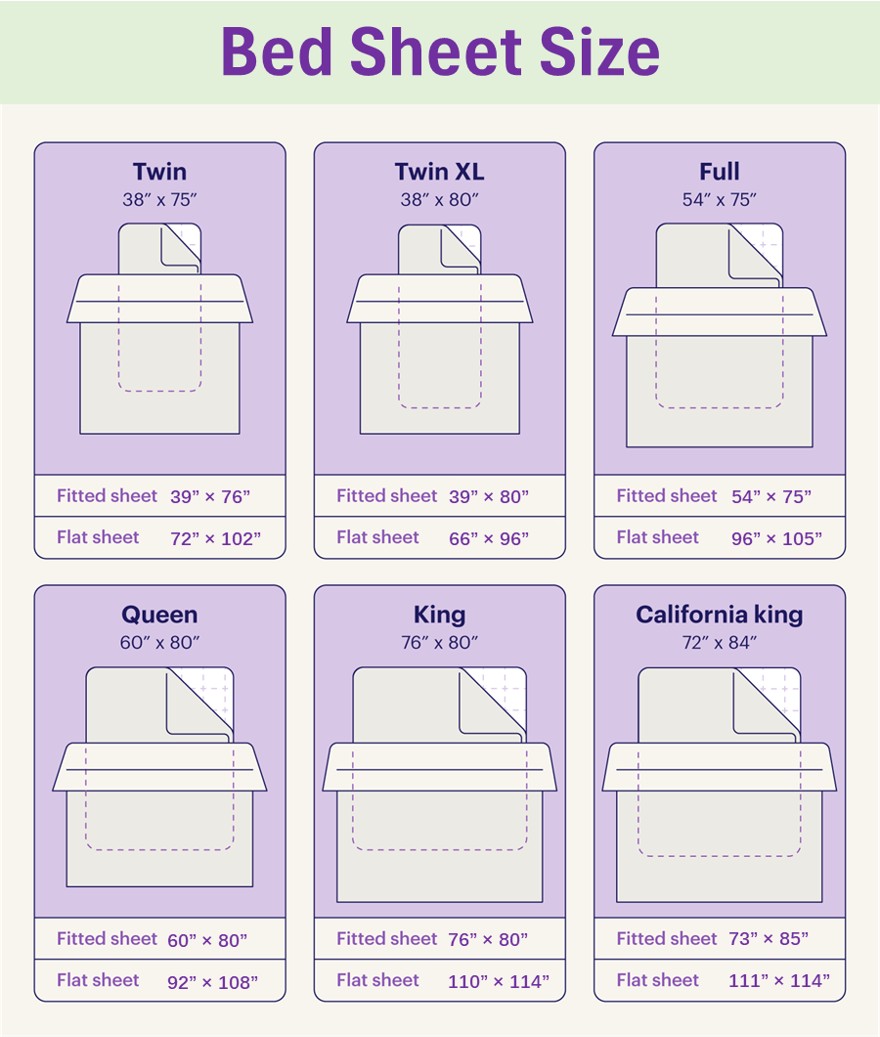
| Size | Mattress Dimensions (inches) | Fitted Sheet Size (inches) | Flat Sheet Size (inches) |
|---|---|---|---|
| Crib | 28 x 52 | 28 x 52-54 | N/A |
| Twin | 38 x 75 | 39 x 76 | 72 x 102 |
| Full | 54 x 75 | 54 x 75 | 96 x 105 |
| Queen | 60 x 80 | 60 x 80 | 92 x 108 |
| King | 76 x 80 | 76 x 80 | 110 x 114 |
| California King | 72 x 84 | 73 x 85 | 111 x 114 |
| Bed Sheet Size Chart Reference Information : BedSizes.com | |||
About Bed Sheet Size
How to choose the correct size of bed sheets based on the size of the bed and mattress?
1. Understanding the Core Variables—Size and Depth.
The golden rule of sheet selection is simple: Sheets are designed to fit the mattress, not the bed frame or headboard. Two primary dimensions dictate the correct fit:
① Mattress Surface Dimensions (Length x Width): This determines the "size" label (Twin, Queen, King, etc.).
② Mattress Depth (Height/Thickness): This is the most commonly overlooked factor and the leading cause of ill-fitting sheets in the modern era.
Standard Mattress Sizes (U.S.)
First, accurately identify your mattress size. When in doubt, use a tape measure. Standard dimensions are:
· Twin: 38 inches wide x 75 inches long
· Twin XL: 38 inches wide x 80 inches long (common in dormitories)
· Full/Double: 54 inches wide x 75 inches long
· Queen: 60 inches wide x 80 inches long (the most popular size)
· King: 76 inches wide x 80 inches long
· California King: 72 inches wide x 84 inches long (offers extra length)
* The Critical Factor: Measuring Mattress Depth
Modern mattresses, especially pillow-tops, memory foam, latex, and hybrid models, have moved far beyond the standard 9-12 inch depth. It's now common to find mattresses 14, 16, or even 20+ inches thick.
How to Measure: Run a tape measure from the top of the mattress straight down to the bottom, where it meets the box spring or platform. Do not include the height of the foundation. This number is your mattress depth.
2. Decoding Sheet Packaging and Terminology.
Sheet sets are comprised of a flat or fitted bottom sheet and one or two pillowcases. The key to a good fit lies in understanding the specifications listed on the package.
Fitted Sheet Pocket Depth: This is the single most important specification to check. It indicates how deep a pocket the elasticated sheet is designed to cover. It is typically listed as "Fits up to X-inch mattresses."
· Standard/Regular: Usually fits mattresses up to 12 inches deep.
· Deep Pocket: Typically fits mattresses 13-16 inches deep.
· Extra Deep Pocket/Super Deep: Designed for mattresses 17-22+ inches deep.
A Crucial Tip: Always choose a fitted sheet with a pocket depth 2-3 inches greater than your actual mattress depth. This extra fabric is essential for a secure fit. It allows the sheet to tuck fully under the mattress without straining at the corners, preventing it from popping off during the night.
Flat Sheet Dimensions: The flat (top) sheet should be large enough to drape comfortably over the sides and foot of the bed. Its dimensions are always larger than the mattress. For a Queen bed (60x80), a standard flat sheet might be 90x102 inches, providing ample overhang for tucking in or a layered look.
3. A Step-by-Step Selection Process.
Follow this process to eliminate guesswork:
① Measure Your Mattress: Use a fabric tape measure. Record the exact Width, Length, and Depth.
② Determine Your Sheet Size: Match your width and length to the standard size chart (e.g., 60"x80" = Queen).
③ Calculate Required Pocket Depth: Add 2-3 inches to your mattress depth. If your mattress is 15 inches thick, look for sheets labeled for 17-18 inch depths.
④ Read the Label Meticulously: Before purchasing, physically check the package or online description. It should clearly state: "Queen Sheet Set," "Fits mattresses up to 18" deep."
⑤ Consider Special Features:
· All-Around Elastic vs. Corner Elastic: All-around elastic (elastic encircling the entire sheet) provides a more secure, uniform hold than elastic just at the corners.
· Fitted Sheet Labels: Some high-end sheets label the "side" and "end" (head/foot) of the fitted sheet, making bed-making easier.
· Sheet Suspenders/Straps: If you have an exceptionally thick mattress or a partner who tosses and turns, these inexpensive accessories clip onto the sheet corners and stretch under the mattress to lock it in place.
4. Addressing Special Mattress Types.
① Pillow-Top Mattresses: These often have a softer, padded layer stitched on top, creating a "lip" where the top meets the sides. This contour can make standard sheets slide off. Solution: Choose a deep or extra-deep pocket sheet designed for "pillow-top" mattresses, which have additional fabric to accommodate this ledge.
② Adjustable Beds: These require highly flexible, durable sheets with deep pockets and strong elastic that can withstand frequent movement and extreme angles. Look for sheets specifically marketed as "adjustable bed friendly."
③ Round or Custom Beds: Standard sheets will not work. You must seek out manufacturers who specialize in custom-sized bedding.
5. Material and Weave: The Comfort Layer.
While not directly related to fit, the material impacts feel, durability, and how the sheet "hugs" the mattress.
· Cotton (Percale, Sateen): Breathable, crisp, and durable. Percale has a matte, cool feel; sateen is softer, warmer, and has a subtle sheen. Long-staple varieties (Egyptian, Pima, Supima) are strongest.
· Linen: Highly breathable, moisture-wicking, and gets softer over time. It has a relaxed, textured look and provides a cool sleep.
· Bamboo Rayon/Lyocell (Tencel™): Exceptionally soft, silky, and thermoregulating. It’s also moisture-wicking and resistant to bacteria.
· Microfiber (Polyester): Affordable, wrinkle-resistant, and soft. However, it is less breathable than natural fibers and can trap heat.
· Silk: Luxuriously smooth and cool, but requires delicate care. It can be slippery on the mattress.
A higher thread count (e.g., 300-600 for cotton) often indicates a softer, denser fabric, but it's not the sole indicator of quality. Fiber length and weave are equally important.
6. Troubleshooting Common Fit Problems.
① Problem: Sheets pop off the corners constantly.
Cause & Fix: The pocket depth is too shallow. Remeasure your mattress and upgrade to a deeper pocket size. Use sheet straps as a temporary solution.
② Problem: Sheets are too tight and feel like they're shrinking.
Cause & Fix: Likely a combination of a too-small pocket depth and natural cotton shrinkage. Always wash and dry new cotton sheets before first use (following care labels) to pre-shrink them. If still tight, you need larger sheets.
③ Problem: Excess fabric pooling at the sides or corners.
Cause & Fix: The pocket depth is too large for your mattress. While less common, it creates a sloppy look. Seek a sheet set with a pocket depth closer to your actual mattress measurement.
④ Problem: Flat sheet is too narrow/short.
Cause & Fix: You may have a "bed" or "mattress pad" flat sheet instead of a standard "flat" sheet. Check dimensions before buying. For a tucked-in look, ensure the flat sheet is long and wide enough to tuck under the mattress on three sides with ease.
Conclusion: The Investment in Rest.
Choosing the correct bed sheet size is a practical investment in your sleep quality and daily comfort.
Remember: Match the label (Twin, Queen, King) to your mattress surface dimensions, and always choose a fitted sheet pocket depth that exceeds your mattress depth by several inches. With this knowledge, you can confidently select bedding that promises.