About Sleep
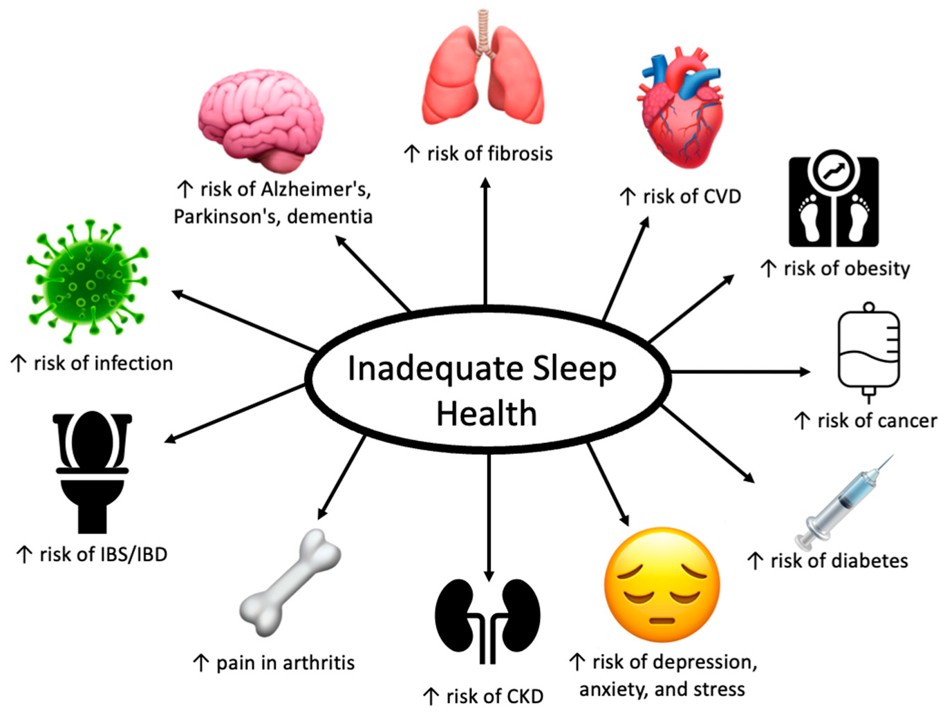
Why do we need sleep?
1. Brain Maintenance and Cleanup.
Synaptic Pruning: Sleep helps strengthen important neural connections and prune away less important ones (synaptic homeostasis). This keeps your brain efficient and learning-ready.
2. Memory Consolidation and Learning.
· Different sleep stages play roles:
Slow-wave sleep (deep sleep) consolidates factual memories and spatial memories.
REM sleep is linked to consolidating procedural skills (like playing piano) and emotional memories.
3. Cognitive Function and Performance.
· Sleep deprivation mimics effects of alcohol intoxication in reaction time and judgment.
· Emotional regulation suffers — the amygdala (emotion center) becomes overreactive without sleep.
4. Physical Health and Repair.
· Immune Function: Sleep strengthens immune response and helps fight infections. Chronic sleep deprivation increases susceptibility to illness.
· Metabolic Health: Sleep regulates hormones that control appetite (ghrelin and leptin). Poor sleep is linked to weight gain, insulin resistance, and increased risk of type 2 diabetes.
· Cardiovascular Health: Blood pressure drops during sleep, giving the heart and blood vessels a rest. Chronic sleep deprivation increases risk of hypertension and heart disease.
5. Energy Conservation.
6. Cellular and Molecular Restoration.
How to improve sleep quality?
1. Optimize Your Sleep Environment (The Foundation).
② Keep it Cool: The ideal bedroom temperature is between 60-67°F (15-19°C). A drop in core body temperature is a key sleep signal.
③ Silence & Sound: Use earplugs, a white noise machine, or a fan to block disruptive sounds. Calming sounds (rain, pink noise) can also be helpful.
④ Invest in Your Bed: A comfortable, supportive mattress and pillows are worth the investment. Choose bedding that feels good to you (cooling fabrics like cotton or bamboo are popular).
⑤ Reserve the Bed for Sleep & Sex Only: Train your brain to associate bed with rest, not work, eating, or watching stressful TV.
2. Master Your Pre-Sleep Routine (The Wind-Down).
② The 1-Hour Wind-Down: Create a relaxing ritual starting 60 minutes before bed. This tells your nervous system to shift from "fight-or-flight" to "rest-and-digest."
Digital Sunset: Power down all screens (phone, TV, laptop) at least 60 minutes before bed. Blue light suppresses melatonin.
Calming Activities: Read a (physical) book, listen to soft music or a podcast, take a warm bath, do light stretching, practice meditation or deep breathing.
③ Mind Your Intake:
Caffeine & Nicotine: Avoid after 2 PM. They are stimulants that can linger in your system for hours.
Alcohol: While it may make you drowsy initially, it severely disrupts sleep architecture (especially REM sleep) later in the night.
Heavy Meals & Fluids: Avoid large, spicy, or fatty meals 2-3 hours before bed. Limit fluids close to bedtime to prevent disruptive bathroom trips.
3. Manage Your Daytime Habits.
② Exercise Regularly: Aim for at least 30 minutes of moderate exercise most days, but finish intense workouts at least 3 hours before bed. Gentle evening yoga is fine.
③ Nap Smartly: If you must nap, keep it short (20-30 minutes max) and before 3 PM. Long or late naps can steal nighttime sleep drive.
④ Manage Stress & Worry:
Keep a notepad by your bed to jot down racing thoughts or tomorrow's to-do list before sleep.
Practice mindfulness or gratitude journaling during your wind-down routine.
4. What to Do When You Can't Sleep (In-the-Moment Fixes).
· Avoid Clock-Watching: Turn your clock away from you. Checking the time increases anxiety.
· Progressive Muscle Relaxation: Tense and then slowly relax each muscle group from your toes to your head.
· 4-7-8 Breathing Technique: Inhale quietly through your nose for 4 seconds, hold your breath for 7 seconds, exhale completely through your mouth for 8 seconds. Repeat 3-4 times.
5. When to Seek Professional Help.
· Persistent insomnia (taking >30 minutes to fall asleep most nights).
· Loud snoring, gasping for air, or long pauses in breathing (signs of sleep apnea).
· Uncontrollable urges to move your legs (Restless Legs Syndrome).
· Excessive daytime sleepiness that interferes with daily life.
It's crucial to consult a doctor or a sleep specialist. Underlying medical conditions need proper diagnosis and treatment.